
What Is Natural Chinese Lacquer (Da Qi)?

Updated: Oct 1

Handcrafted Xi Pi Rhinoceros Skin Lacquerware Plate in Black & Gold.
When people first encounter Chinese lacquerware, they often picture historic treasures in museums—perhaps a lavish inlay wardrobe at the Metropolitan Museum of Art or intricate carved lacquer pieces at the Palace Museum. It can be grand and opulent, or quiet and profoundly subtle. Up close, it reveals details completely different from what you see at a distance.
However, authentic lacquerware is far more than mere surface painting or decoration. It is a functional work of art built slowly, layer by layer, through time and patience.
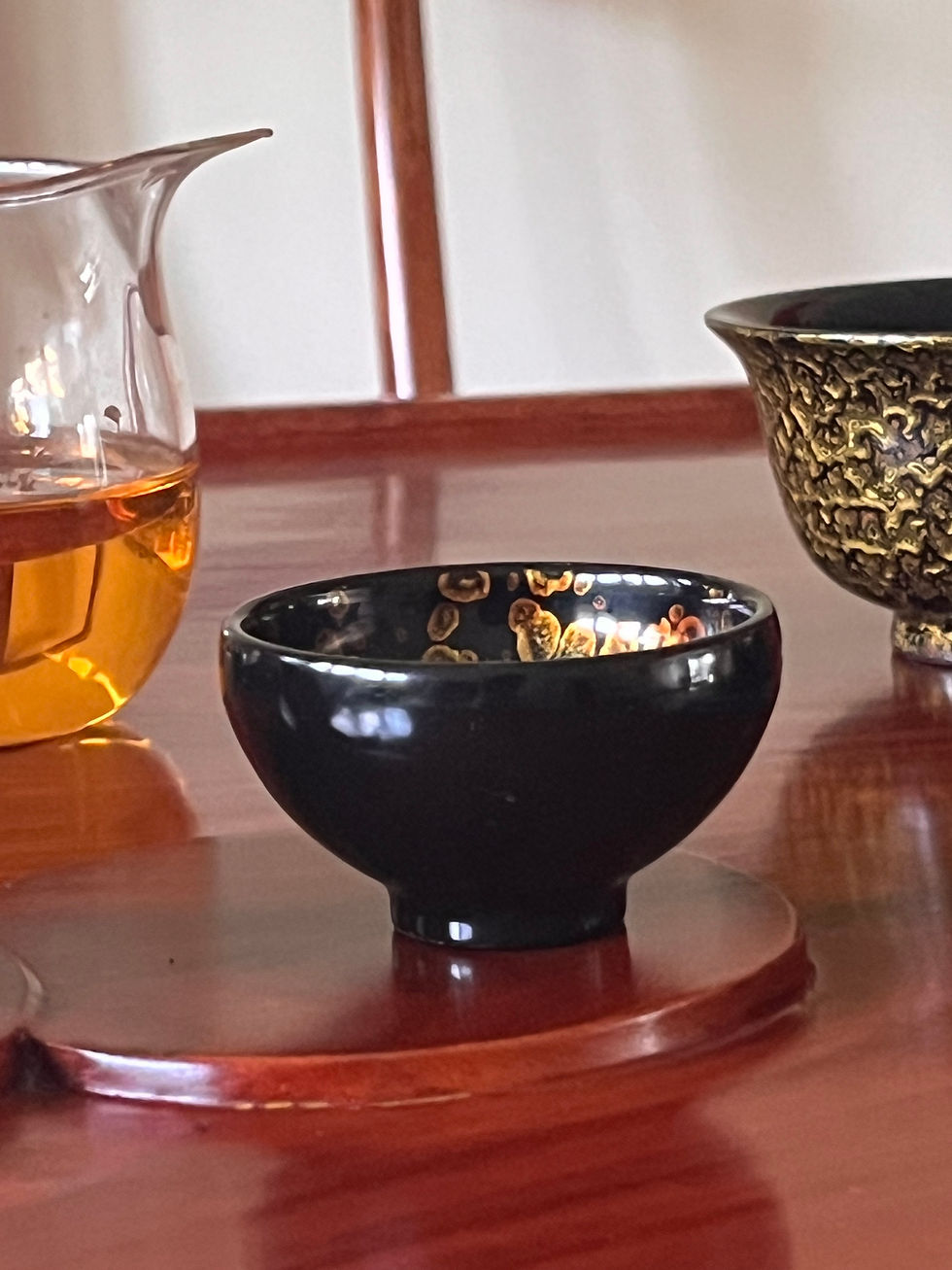
A handcrafted lacquer tea cup integrated into a daily tea ritual, bringing warmth and timeless elegance to modern living.
1. What is Natural Chinese Lacquer (Urushi)?
Traditional lacquerware uses raw, natural lacquer—often referred to as Chinese daqi (大漆), and known in Japan as urushi. Harvested from the sap of the lacquer tree (Toxicodendron vernicifluum), raw lacquer is a complex organic compound containing laccase, urushiol, water, plant gum, and subtle organic matter.
Unlike modern synthetic finishes, natural lacquer does not cure simply by evaporating in air. Instead, it undergoes a complex biochemical curing process under specific humidity and temperature conditions, gradually hardening into a remarkably durable, resilient, and lustrous surface.
A single piece undergoes multiple cycles of applying raw lacquer, coating, curing in a dark, humid curing room (yin fang, 荫房), and hand-sanding. Every step is repeated numerous times, and each layer must cure completely before the next can begin. As a result, completing a single piece takes several months—sometimes even years.

Filtered raw natural lacquer sap (urushi), ready for broad brush application.
2. How is Lacquerware Made?
Every piece is built slowly, in three broad phases. First, the body is reinforced with raw lacquer, lacquer putty, and layers of cloth to create a durable foundation. Next comes the decorative stage: for rhino skin lacquer (Xipi, 犀皮漆), for example, the artisan builds raised ridges, lets them cure, then brushes on layer after layer of contrasting colored lacquer. Finally, the piece is sanded to reveal the buried colors and polished by hand to a warm, deep luster.
For the full step-by-step process, see How Traditional Chinese Lacquerware Is Made.

Creating raised textures (danean)—the foundational layer for Xi Pi lacquer.
3. Why Does Lacquerware Take So Much Time?
This slow pace is often the hardest aspect for newcomers to grasp.
Natural lacquer is a living, organic material with its own temperament. Artisans cannot rush or force it; we must work in harmony with nature’s timeline.
Curing the fabric-and-clay base: If the inner layers do not cure fully, the structural integrity of the object is compromised.
Curing each color coat: Each layer requires anywhere from a week to fifteen days to cure properly. Cutting corners dulls the final colors and ruins the adhesion between layers.
In lacquer making, one of the most important skills isn't knowing when to work, but knowing when to stop and wait. Leaving the piece in the humidity room to mature gradually allows time to shape the final artwork. As the saying goes in our studio: Lacquerware is a craft created together with time.

Applying layers of golden lacquer over the raised textures (danean)—one of many precise coating steps required for Xi Pi lacquerware.
4. Is Lacquerware Only for Display?
While museum pieces are kept behind glass, lacquerware was originally created to be touched, held, and used every day.
Historically, lacquer was applied to everything from furniture and serving bowls to tea wares, incense utensils, and scholar's desk accessories. Because natural lacquer is waterproof, heat-resistant, and resistant to acid and corrosion—often described as "decay-proof for a thousand years"—it makes an exceptional material for functional objects. However, because each piece demands so much labor, many owners treat them purely as collectibles.
Today, lacquerware is making a quiet return to daily ritual. Whether for tea ceremonies, incense appreciation, floral arrangements, or fine dining, a lacquer piece adds a grounding presence to a modern home. It can be an understated tray on your desk or a warm, tactile cup for your morning tea—meant to be appreciated and lived with every day.
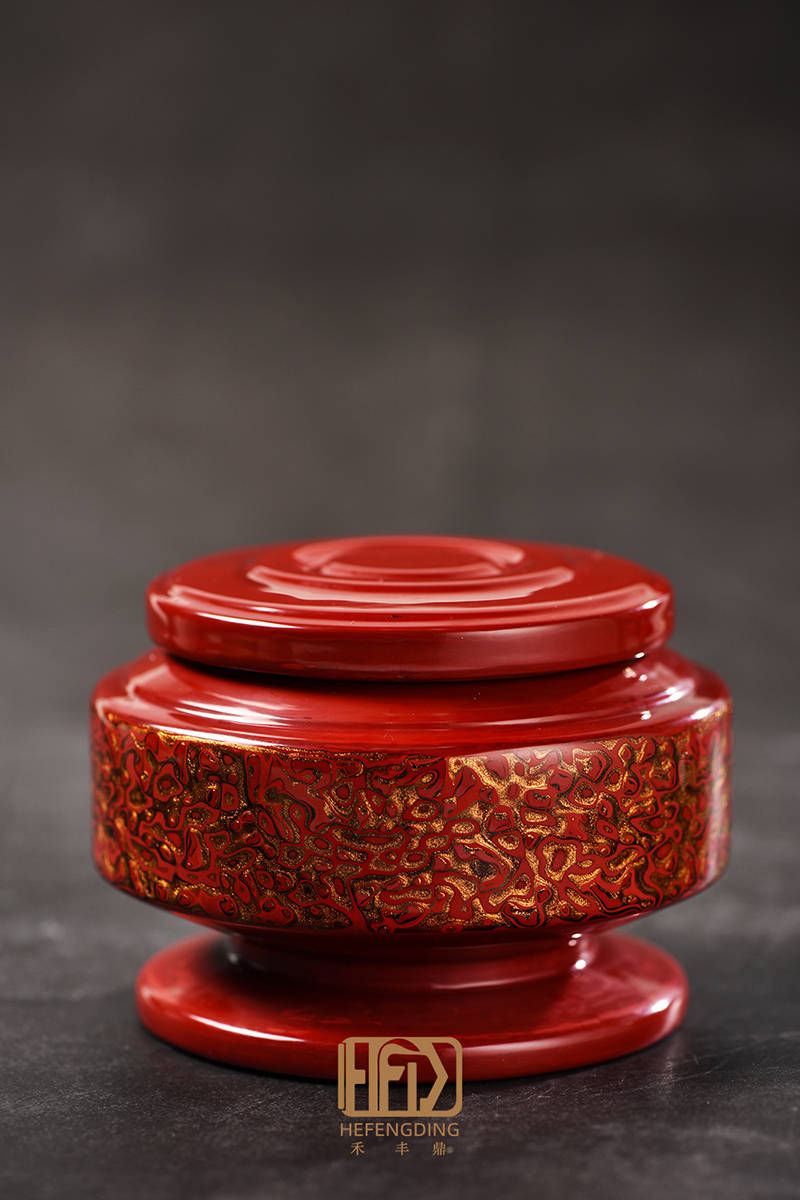
Red & Gold Xi Pi Lacquer Incense Box.
5. What Makes Chinese Lacquer Unique?
Lacquer traditions exist across East and Southeast Asia, but Chinese lacquer art carries thousands of years of evolution, shaped by distinct aesthetic sensibilities, forms, and philosophies.
The craft reflects a deep reverence for nature balanced with order, restraint, and an understanding of time. Looking closely at a piece of traditional lacquerware, you see more than an exquisite object—you experience a quiet reflection of Chinese philosophy and artistic heritage.
This dialogue between nature, time, and human hands is precisely why we continue to practice and share this ancient craft today.

The flowing gold process (Liu Jin) in motion—allowing natural lacquer and mineral gold powder to form organic, cascading textures on a wooden base.
6. Our Studio's Craft & Signature Techniques
While the world of traditional lacquer is vast, our studio focuses on a few specialized techniques: rhino skin lacquer (Xipi, 犀皮漆), flowing gold lacquer (Liu Jin, 流金), and ice-crackle lacquer (Bing Lie Wen, 冰裂纹).
Each technique requires its own process and carries its own distinct personality. To see how they are made, read How Rhino Skin Lacquer (Xipi) Is Made: The Chong Series(这里放链接), with more techniques to follow.
If you are curious about natural lacquer craftsmanship or have questions about a specific piece, feel free to leave a comment below or explore our collection to see how time transforms raw sap into timeless art.


Comments